Table of contents
If you have ever left a lab draw wondering what the bill will be, you are not alone. The cost of a comprehensive metabolic panel in the US swings wildly depending on where the blood is drawn, how it is billed, and whether you use insurance. Without insurance, the exact same panel runs anywhere from $10 to $400 or more.
The CMP is billed as a single panel under one code, CPT 80053. Same test, same 14 analytes. Yet the sticker price and your final bill rarely match, because facility fees, phlebotomy charges, and lab markups get stacked on top. This guide breaks down what you will actually pay across every setting, why frequent testing quietly drains your budget, and how an annual model changes the math.
The cost problem
Same test. Wildly different bill.
By setting
Where you go decides what you pay.
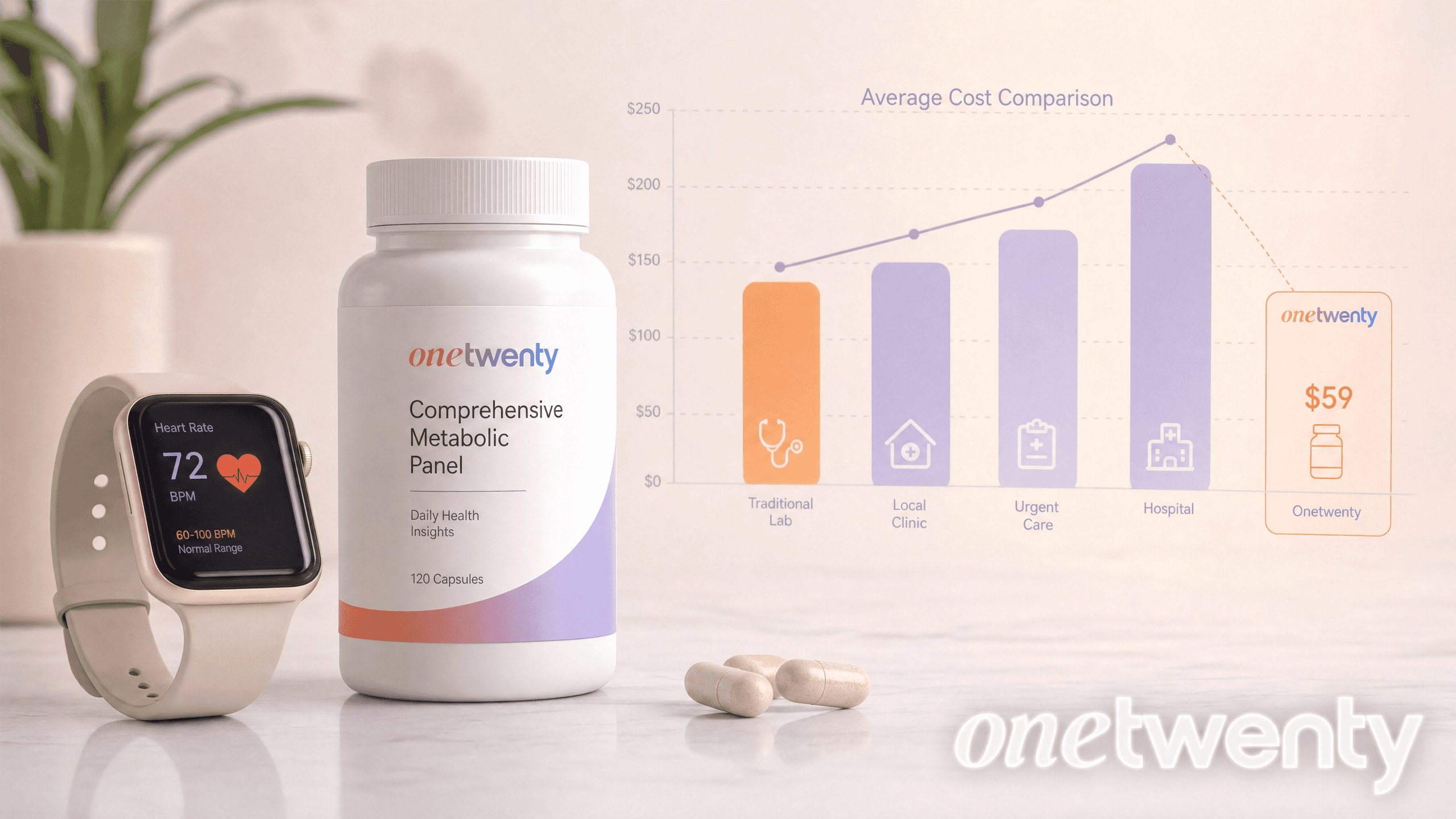
The lowest prices come from independent labs and direct-to-consumer platforms that negotiate bulk rates. Hospital outpatient departments charge dramatically higher chargemaster prices for the exact same result.
Walk into a hospital lab without asking for pricing and a $35 test can become $300 once a phlebotomy fee ($20 to $50) and a facility fee ($100+) get added. Most people who shop around and pay cash land in the $25 to $80 range.
By region
Geography moves the price too.
| State | Typical cash range | Market |
|---|---|---|
| Texas | $20 to $50 | High competition, abundant independents |
| Florida | $25 to $60 | High competition |
| Arizona | $30 to $70 | High competition |
| California | $100 to $350 | Hospital market dominance |
| New York | $150 to $400+ | Hospital market dominance |
| Massachusetts | $200 to $500 | Hospital market dominance |
And then there is insurance
On a high-deductible plan, you pay near-cash prices until the deductible is met. A CMP coded as preventive during an annual wellness visit may cost nothing in-network, while the same test ordered for symptoms applies to your deductible. EOB statements muddy this further, often showing a billed amount 5 to 10 times the allowed rate, which leaves people unsure what they actually owe.
What you are buying
What a CMP reveals.
The 14 analytes cluster into functional domains that report on different systems. Being in range is not the same as optimal, and trends matter more than any single snapshot.
BUN, Creatinine, eGFR
How well your kidneys filter. A persistent eGFR below 60 for at least three months is consistent with chronic kidney disease stage G3, especially alongside other markers of kidney damage, and it can stay silent until advanced.
AST, ALT, ALP, Bilirubin
Catch liver damage before symptoms. With non-alcoholic fatty liver affecting 25% of US adults, these markers matter more than ever.
Na, K, Cl, CO2
Reveal dehydration, diuretic effects, and acid-base balance, plus your body’s ability to hold proper hydration and pH.
Albumin, Total protein
Albumin under 3.5 g/dL points to malnutrition, chronic inflammation, or liver synthetic dysfunction.
Fasting blood sugar
A fasting glucose of 100 to 125 mg/dL is consistent with impaired fasting glucose (prediabetes) when confirmed by repeat testing. Tracked over time, it is an early warning for insulin resistance.
The trend is the signal
A gradual rise in ALT over several quarters may warrant further evaluation for conditions such as metabolic dysfunction-associated steatotic liver disease (MASLD), medication effects, alcohol use, or viral hepatitis, and should always be interpreted in clinical context. That is why certain medications make routine monitoring sensible: statins (mild ALT elevations can occur, though clinically significant liver injury is uncommon), metformin (kidney function), antihypertensives (electrolytes), and NSAIDs (creatinine). Frequent testing is the point, and frequent testing is what makes annual costs pile up under traditional billing.
Over a year
How fast it compounds.
A single CMP is not the problem. Repeat testing 2 to 4 times a year, plus the lipid and A1c panels that ride along with it, is where the real money goes.
A person managing type 2 diabetes with quarterly CMPs, A1c, and lipid panels at hospital rates clears $1,500 easily, before any specialist adds their own orders. OneTwenty bundles multiple comprehensive panels into one predictable annual cost, often 50 to 70% below fragmented billing.
The hidden tail
What an abnormal result can cost.
One out-of-range value can trigger a cascade of follow-up that gets expensive fast, especially in hospital systems.
| Abnormal finding | Common follow-up | Typical cost |
|---|---|---|
| Elevated creatinine | Urine microalbumin, renal ultrasound | $200 to $650 |
| High ALT / AST | Hepatitis panel, FibroScan | $300 to $800 |
| Elevated glucose | A1c, oral glucose tolerance test | $100 to $200 |
| Multiple markers high | Specialist referral plus additional panels | $500 to $2,000+ |
Patients often delay this necessary workup over cost, which can let conditions like liver disease or uncontrolled diabetes progress. A planned schedule with clear expectations for follow-up lowers the cost per useful data point.
Which fits you
One annual test, or ongoing monitoring.
For many, a periodic CMP is enough
- Young, otherwise healthy adult with no symptoms or risk factors
- Annual primary care visit with stable prior labs
- Insurance covering a once-yearly wellness panel at no out-of-pocket cost
Quarterly or more makes sense
- Type 2 diabetes, prediabetes, or insulin resistance
- Hypertension or heart failure, especially with diuretics affecting electrolytes
- Fatty liver, obesity, or high triglycerides needing ongoing tracking
- Medications with liver or kidney effects
- Active optimization where you want to see cause and effect
Screening intervals vary between organizations and depend on age, comorbidities, medications, and risk factors, so testing frequency should be individualized with your clinician rather than fixed to a single rule.
More than a snapshot
Where labs meet your daily data.
A CMP is worth far more when read alongside the data your devices already collect, instead of as an isolated quarterly snapshot.
Rising fasting glucose
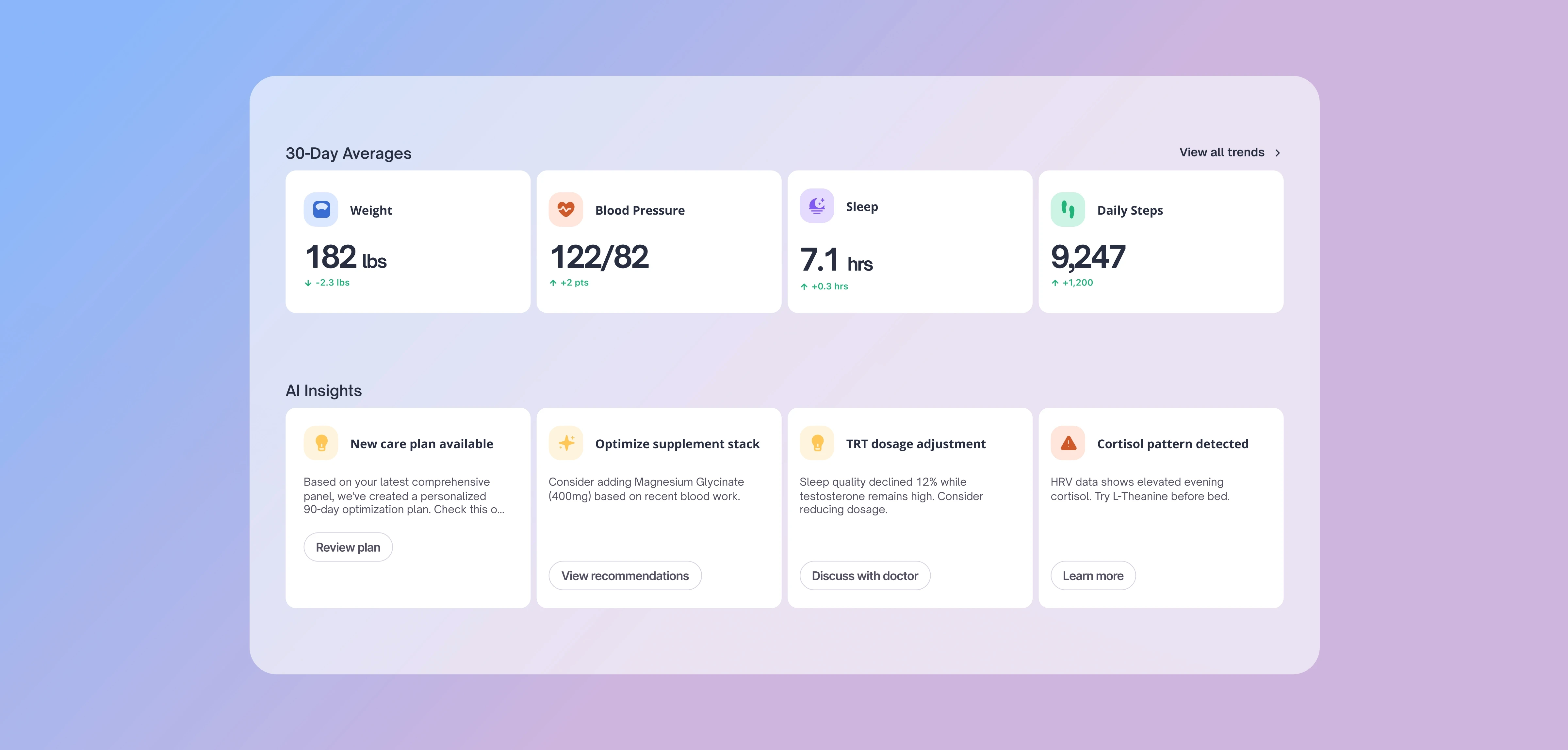
Paired with low step counts and poor sleep from your wearables, it triggers specific coaching and a smarter A1c retest window.
ALT trending down
Mildly elevated, falling over two quarters alongside weight loss and better movement, may suggest improving liver health, though lab trends should be interpreted together with the broader clinical picture.
Electrolyte shifts
Correlated with higher training intensity and HRV changes, the context explains values that might otherwise look alarming.
Because OneTwenty plans for multiple CMPs across the year, you see cause and effect rather than a number with no before or after. That is what turns an expensive test into an actionable one.
Head to head
Traditional billing vs OneTwenty.
| Factor | Traditional path | OneTwenty path |
|---|---|---|
| Cost predictability | Low, surprise bills common | High, one annual fee |
| Per-CMP effective cost | $40 to $300+ | Much lower via bundling |
| Data integration | None | Wearables, smart scales, CGM |
| Follow-up optimization | Fragmented | Trend-based scheduling |
| Annual spend, frequent tester | $1,000 to $2,000+ | Lower total for comparable testing |
OneTwenty is not a replacement for your physician. It is a smarter framework for paying for and using lab data over the long term, built for adults 30 to 70 watching metabolic health, people on multiple medications, wearable users, and anyone on a high-deductible plan who is effectively paying cash anyway.
Pay less either way
How to cut your lab costs.
You cannot always change where your doctor sends labs, but these moves control cost on any path.
This article is educational and is not medical or financial advice. Prices are typical ranges and vary by lab, location, insurance, and time. Lab testing and interpretation should be guided by a licensed clinician.
Fact Checked
Dr. Mohammed A. Fouda, MD
Dr. Fouda is a Neurosurgery research scholar. His work focus primarily on Brain tumor behavior and quality of life of cancer patients as well as biomedical engineering and medical device innovation.



How OneTwenty Works
Not your average
Checkup.
Every life stage brings new biological demands. Tracking the right metrics at the right time helps you adapt, optimize performance, and extend both lifespan and healthspan.
Your Annual Physical
Manual Data Processing
Guesswork Trend Detection
Once-a-year physical
Reactive, tested when sick
No data between visits
Once a year testing
Delayed Results
One-size dosing, set and forget
Real-Time Trend Insights
Daily smart-device data
Automated Data Sync
Quarterly Biomarker Tests
Optimal, personalized targets
Plain-language AI insights
Medications titrated to your data
Built to extend healthspan

Frequently Asked Questions
Clarity before
you commit
Answers on setup, scale, and support to remove blockers.